


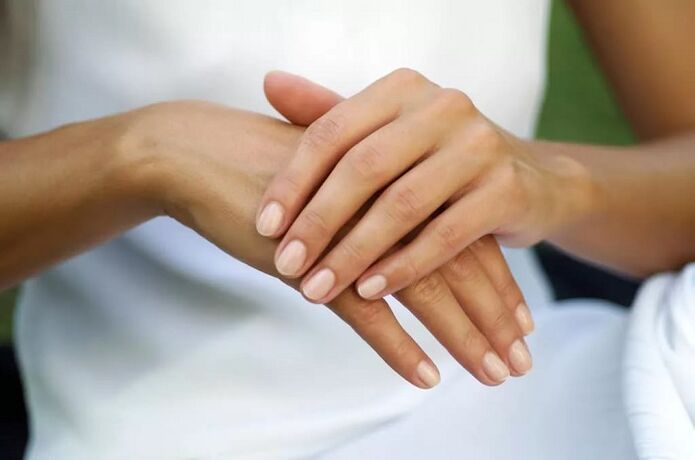
Psoriasis is a fairly common dermatological disease, which is characterized by peeling and severe itching of the affected skin.There are many varieties of this disease.The most common types of psoriasis should be considered in detail, and these lesions can also be seen in the photo.
Causes of the disease
The disease usually has a chronic form.It develops for the following reasons:
- Weakening of the immune system.Improper immune processes lead to thickening of the skin, as a result of which the chronic form of the disease gradually begins to develop.
- Genetic predisposition.The likelihood of skin damage is quite high if at least one of the parents suffered from psoriasis.
- Nervous disorders and emotional turmoil.This is one of the most serious factors in the development of this skin disease.
- Hormonal imbalance.Pathological changes in the endocrine system give the starting impetus to the appearance of the first signs of psoriasis.
- Disturbance of metabolic processes in the body.This is due to a lack of vitamins and other nutrients.
- Presence of parasitic diseases.Toxic substances that poison the human body with various types of helminths can cause damage to the skin.
Modern medicine has not yet discovered the exact cause of the development of this pathology.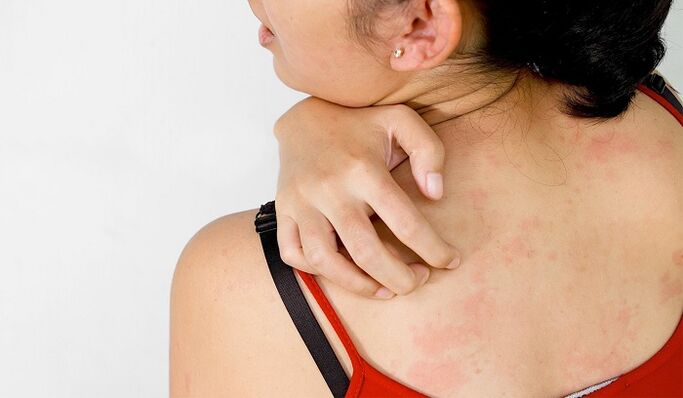 Most often, experts find a relationship between immune system disorders and psoriatic rashes.
Symptoms of the disease
As already mentioned, there are many types of this dermatological disease.Depending on this, the patient may experience different symptoms.The most common forms of psoriasis and their symptoms should be considered in more detail.
Psoriasis vulgaris
It is the appearance of plaques with white scales.The affected skin becomes inflamed and changes color.Such plaques gradually increase in size, and the scales peel off over time.Psoriasis on the hands may not have scaly formations, especially on the folds.In these places, the skin becomes red, severe itching and burning appears.Inguinal psoriasis develops in the same way.Psoriasis vulgaris on the body can affect most of the skin area.
Guttate psoriasis
This form of the disease received its name due to the teardrop-shaped shape of convex psoriatic rashes.They have a purplish-red hue.Guttate neoplasms usually spread on the back, abdomen, and affect almost all parts of the body.Cause severe itching, especially during periods of exacerbation.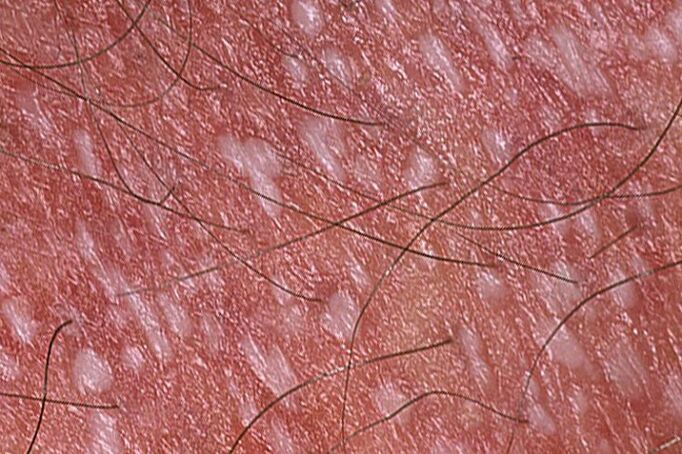 Most often, this form of the disease develops as a result of previous infectious diseases.
Pustular psoriasis: photo
This type of psoriasis is the appearance of small tumors that are filled with clear liquid.The skin around these peculiar pimples becomes inflamed and turns bright red.It is subject to rapid peeling, which causes pain.Often this form of the disease manifests itself on the nail plates.You can see what pustular psoriasis looks like in the photo.
Arthropathic psoriasis
It develops gradually, the initial stage of this disease can occur without any symptoms.Damage to joint and muscle tissue occurs.As it develops, the patient begins to feel discomfort in the area of the affected joints, and stiffness of movements is observed, especially after waking up.The skin in the affected areas becomes inflamed and red.The joints of the upper and lower extremities are most often affected by psoriatic arthrosis.
Palmoplantar psoriasis
This is a fairly common form of the disease.Characterized by damage to the palms and soles.In these places, hard lesions with clearly defined edges appear.Constant dryness and flaking of the skin can lead to cracks.In such situations, extreme caution should be exercised, as infection of the resulting wounds may occur.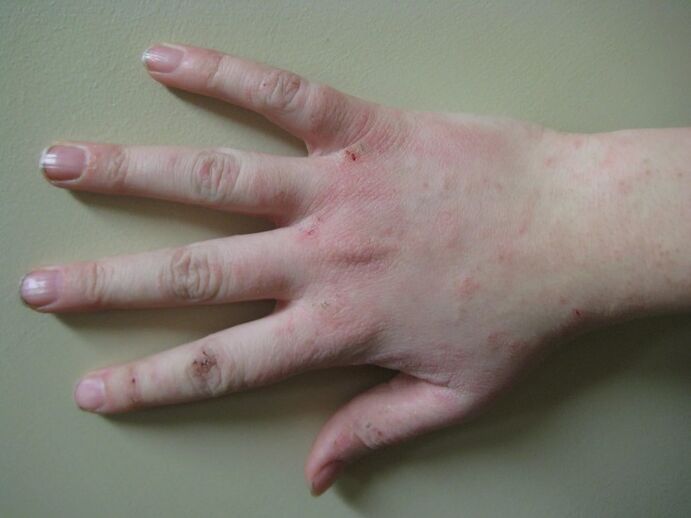 The skin in the affected areas becomes hard and rough.
Psoriasis at an early stage: photo
How does the development of this pathology begin?At the initial stage, this disease may be asymptomatic.Usually small plaques of a pinkish tint appear.The surface of the skin on them is still smooth and glossy.After a couple of days, the plaques become covered with small scales, and itching in the affected areas begins to bother you.These scales come off quite easily from the plaques, and the skin underneath has an inflamed appearance.This process is called point psoriasis.
Psoriasis in children
This disease can occur even in newborns.It is always accompanied by painful sensations in the affected areas, after which severe itching appears.The resulting plaques most often crack, and minor bleeding begins to occur.This process is called capillary psoriasis.The danger of the form lies in the possible infection of the wounds formed in the child.
Psoriasis on the head: photo
You can often find damage to the scalp with this disease.In the advanced form of such a lesion, hair falls out and stops growing.Localization of lesions can be observed in the following places on the head:
- psoriasis behind the ears;
- in the occipital region and on the forehead;
- psoriasis on the neck;
- on the scalp.
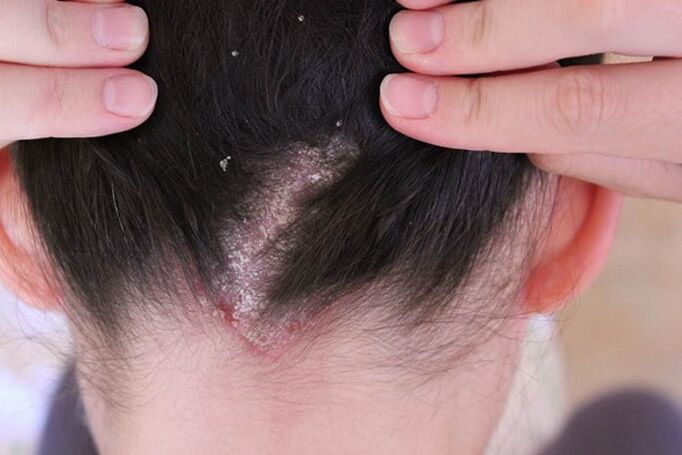
A disease on the head is usually accompanied by the following symptoms:
- slight peeling along with itching and irritation;
- inflammation in the affected areas;
- scratching sore spots leads to damage;
- the skin gradually becomes rougher and thicker;
- the appearance of dandruff on the scalp;
- the skin is very susceptible to severe injuries;
- the itching increases every day.
Advanced psoriasis - photo
An advanced form of the disease can lead to dangerous consequences.In addition to psoriatic arthrosis, a person can develop the following pathologies:
- disruption of the functioning of the heart and blood vessels;
- ischemic disease;
- stroke;
- cardiac arrhythmia.
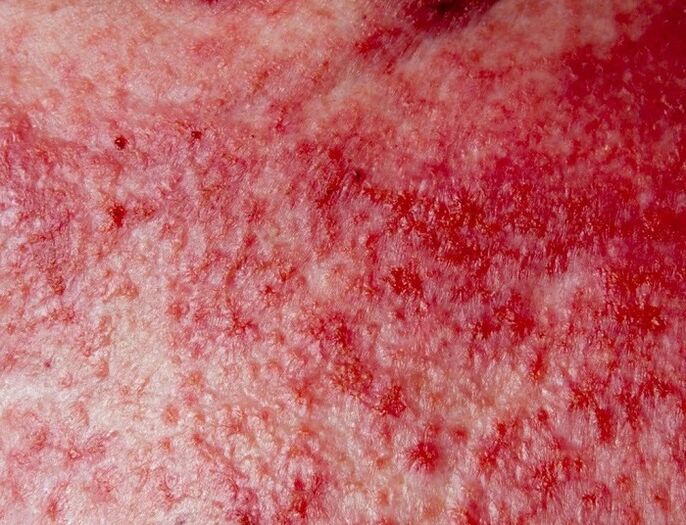
The patient begins to feel the following ailments:
- inflamed skin has a purple color;
- general weakness of the body;
- increased body temperature;
- rapid heartbeat;
- poor appetite up to its complete loss;
- weakness in muscle tissue and joints.
In advanced forms of the disease, a significant area of skin is affected.The patient feels constant weakness and fatigue.Therefore, it is very important to start timely treatment.
Consequences of the disease
It's no secret that psoriatic rashes significantly impair the quality of everyday life.The affected person may experience the following psychophysiological problems:
- fear of playing sports;
- the need to constantly hide your illness;
- self-confidence gradually disappears;
- development of chronic depression;
- problems with the opposite sex, a person begins to avoid intimacy with a loved one.
Also, in some cases, this pathology negatively affects a person’s choice of professional activity.
Therefore, the disease negatively affects not only physical health, but also the psycho-emotional state.At the first signs of psoriasis, you need to consult a specialist for help.He will prescribe the most effective treatment and help get rid of the rashes as quickly as possible.